
"The pursuit of clandestine activities in respect of nuclear technologies is unacceptable and dangerous. All States must transparently live up to the international commitment that they have undertaken," he said at the conference 'Towards a World Free of Nuclear Weapons'.

India has a 'natural global partnership' with US, says PM.
Disgraced Pakistani nuclear scientist A Q Khan has expressed his willingness to contest elections while suggesting the formation of a government of technocrats because politicians have failed to deliver good governance.
Pakistan allegedly was the source of the centrifuge design technology in Libya's nuclear programme.
However, there would be some exceptions such as equipment meant for light water reactors and low-enriched uranium when it is incorporated in assembled nuclear fuel elements for such reactors.

Jaishankar said he was confident that Prime Minister Modi and President Putin will meet for an annual summit next year.

Hydrography (underwater geography) prevents the Indian Navy for opting for an all-conventional, or all-nuclear submarine fleet.
A Pakistani national pleaded guilty on Friday before a United States court to charges of illegally exporting nuclear-related material to restricted entities back home, Justice Department said.
The government on Wednesday admitted in the Lok Sabha that Pakistan had clandestinely acquired know-how on nuclear weapons technology. In a written reply, External Affairs Minister Pranab Mukherjee said New Delhi has consistently shared its concerns regarding the adverse effects of such developments on India's security with the international community.
United States President Barack Obama has said that he was not worried about radiation from the quake hit Japanese nuclear power plant reaching Hawaii.
The rationale is to prevent foreign scientists of suspect countries from taking courses which would help them acquire the knowledge necessary to assist with the production or manufacture (proliferation) of WMD

The change of heart in the US and India was propelled by the increased threat of China to both countries, explains Ambassador T P Sreenivasan.

With this India joins the select group of countries which have a nuclear triad -- capable of delivering nuclear weapons by aircraft, ballistic missiles and submarine launched missiles.

Informing the world leaders of measures taken by him, Modi said India will continue to accord a high national priority to nuclear security through strong institutional framework, independent regulatory agency and trained and specialised manpower.

'Once the military starts to draw up plans for using nuclear weapons, then nuclear weapons could be used earlier in a crisis than otherwise.'
As Australia is one of the world's biggest uranium-producing countries, its attitude will be critical to India's efforts to open up trade in nuclear materials.
When dealing with risky technology, it is most important to take people into confidence and tell them what the real risks are, says environment justice activist Nityanand Jayaraman.
He said there is a need to pave the way for India to benefit from nuclear power without restrictions.

Indian policymakers must realise that in buying small quantities of equipment, it becomes hard to start manufacturing them in India, explains Ajai Shukla.
An American newspaper columnist has proposed a $100 billion buyout of Pakistan's nuclear arsenals, saying these weapons had become "an inviting target" for Jehadists."

The two countries also asked all nations to stop cross-border movement of terrorists and asserted that a decisive collective response from the international community without 'double standards and selectivity' was required to combat the threat of terrorism.
The report is an embarrassment to the Bush Administration, which views Musharraf as its best bet in the region against terrorism and proliferation of WMD.
Prime Minister Manmohan Singh is hopeful that progress will be made on the India-United States nuclear agreement, despite domestic political opposition. "Our domestic politics has prevented us from going ahead. I will still continue to hope that we will make progress in the months that lie ahead," Dr Singh said in New Delhi on Wednesday."This agreement, if it materialises, if it sees light of the day, will open new possibilities of cooperation," he said.
Even as Pakistan continues to urge the international community to accept its membership to the Nuclear Suppliers Group, highly placed sources in the United States who are involved with the tracking of nuclear commerce have claimed that Islamabad is still selling nuclear materials to North Korea.

I suggest we build a Vigyan Mandir (Temple of Science) with the ambience of a place of worship, so that it becomes a destination for pilgrims. We should embed on its walls bronze plaques describing each scientist mentioned here along with about a dozen of our ancient mathematicians, recommends Professor Kalyan Singhal, historian of science and technology.
India was on Wednesday unperturbed by Nuclear Suppliers Group's decision to strengthen guidelines on enrichment and reprocessing technology transfer, saying it expected its bilateral agreements on full implementation of nuclear deals to be fully honoured without any pre-conditions.
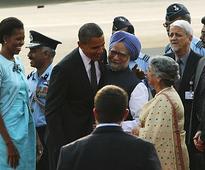
After the second US-India strategic dialogue, Aziz Haniffa finds growing concern about the civilian nuclear deal trapped in limbo.

'The Modi visit will prove to be the watershed where India and the United States commenced technology trade and transfer.'
The AQ Khan nuclear malaise has disseminated to places beyond the usual suspect countries, says a report in the New York Times. Four years after Abdul Qadeer Khan, the leader of the world's largest black market in nuclear technology, was put under house arrest, much more shocking revelations are coming out of the scientist's network's computers.
Pakistan's maneuvers will force both sides, at tremendous cost, to upgrade their state of strategic readiness in the early stages of conflict or military standoff, creating a dangerous escalatory scenario, according to Brigadier (Retired) Arun Sahgal and Rahul Bedi
Russia's proposal about the creation of a joint venture for uranium enrichment on Russian soil is under negotiation and the Iranians are seriously considering it.
The Bharatiya Janata Party, if voted to power, will "revise" the country's nuclear doctrine to make it "relevant to challenges of current times", said the party manifesto while talking about maintaining the credible minimum deterrent in tune with the "changing geostatic realities".
The government on Monday asserted that India was not worried by the decision of G-8 nations to curb the transfer of some sensitive nuclear technology to nations which have not signed the Nuclear non-Proliferation Treaty. The statement from Finance Minister Pranab Mukherjee came after Left parties and the Bharatiya Janata Party were seen on the same side in the Lok Sabha and the Rajya Sabha, demanding a discussion on the key issue.
With President George W Bush set to sign on Wednesday the bill on Indo-US nuclear deal into law, the Indian-American community feels the focus now should be on using the current framework for the future development of bilateral ties, including creating opportunities for businesses, NGOs and government entities.
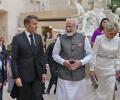
India-France synergy is poised to open vistas of collaboration between the two countries, notes Rup Narayan Das.
Referring to Iran's nuclear programme, Israel said it would lead to destabilisation in the Middle East and set off a nuclear arms race in the region.
 © 2026 Rediff.com - Advertise with us - Disclaimer - Privacy Policy - Sitemap - Feedback - About us - Terms of use - Grievances